Restricted Google Ads · Peptide research · 11-month engagement · 0 bans, 0 resets
In this category, ad account bans are routine. This one ran 11 months without one.
$132K in. $1.12M out. 11 months. Zero ad account bans. In a category most platforms refuse to run.
Peptide research products. A category where most operators get their ad accounts banned within weeks, Merchant Center suspends the feed, and Meta blocks the pixel. The platforms treat the vertical as borderline pharmaceutical, the documentation is vague, and the enforcement is harsh.
I scaled this account from $4K to $21K monthly spend while holding ROAS above 8×. That required a hidden-domain Meta pixel firing on a proxy site, server-side CAPI, a Shopping + PMax architecture built around how Google actually handles the category, and ongoing policy management as the rules shifted. Eleven months, $132K spend, $1.12M attributed revenue. No bans, no resets.
Note: formal written consent pending. "Verified Peptides" is the working name, will be anonymised to "US peptide research brand" if the client requests it. All Google Ads screenshots show the real account with AdPistols watermark and account ID visible.
"Incredible scaling of ad spend while maintaining ROAS. Tracking and attribution implementation top notch."
verifiedpeptides.com · Regulated · Peptides · Upwork verified
What this case study actually proves
- One account, one client, 11 consecutive months. Not portfolio averaging, not blended agency math.
- Zero Meta ad account bans, zero Merchant Center suspensions in a category most platforms refuse to run.
- Real architecture (the diagram below) and verifiable math (every number ties to a screenshot). I show the work.
Who this case study is for
- Peptide research, nootropic, hormone, or supplement brands in restricted Google and Meta categories
- DTC operators whose Merchant Center keeps suspending the feed or Meta keeps blocking the pixel
- Brands at $5K to $50K monthly ad spend that need scale but keep getting reset by policy enforcement
- Operators tired of "we don't do regulated categories" agency answers
The category problem
Why most peptide operators fail before they scale, and what I fixed first.
If you're already in this category, you know the cycle: ad account runs for 60-90 days, passes a policy review, gets banned without clear citation, you appeal, you rebuild, you start over. Retargeting audiences reset. Pixel learning resets. Smart Bidding resets. Three to six weeks of pipeline lost every time. The default setup almost guarantees this. Here's why.
- Peptide research products. Google's policy treats the category as borderline pharmaceutical. Standard ad copy triggers disapprovals. Merchant Center listings get flagged. Shopping feeds get suspended without clear policy citation.
- Standard browser pixel on peptide sites fires on a domain Google and Meta already associate with restricted content. Event match quality tanks, attribution breaks, retargeting audiences don't build properly.
- Account started Jul 2024 from a low base: $4,304 first-month spend, $33,216 attributed revenue (ROAS ~7.7×). Structurally sound but room to scale if architecture held.
- Parallel Meta channel needed server-side CAPI through a proxy domain. Pixel couldn't fire from the main site without triggering ad account reviews.
The cost of running it the default way
Without this architecture, the typical fate of a peptide brand on paid ads is short and predictable: Meta ad account banned within weeks, Merchant Center feed suspended, pixel data unusable, retargeting audiences never build, Smart Bidding has nothing to learn from. The brand falls back on organic and word of mouth. The same $21K/month spend that now produces $198K of attributed revenue produces nothing because the account is offline.
Sound familiar? I can usually tell you whether the same fix applies to your account in 30 minutes.
Book a 30-min diagnostic →What I built
Three layers: ads architecture, tracking infrastructure, policy management.
Google Ads architecture
- PMax master campaign as primary revenue driver, 13.19× ROAS at $9.6K spend in last month
- Tiered Shopping structure: high-ROAS PLA (9.9×) + low-prio CPC PLA (3×) for volume
- Search general campaign for branded + intent capture (3.6× ROAS, $16.8K revenue)
- Display general as retargeting layer only, zero conversion expectation, 0.11× ROAS by design
- 6 active campaigns, each with a defined role, no budget overlap or audience collision
Tracking & attribution
- Hidden domain pixel setup, Meta pixel fired from a proxy domain, not the main site
- Conversions API (CAPI) via Purchase_Webhook, server-side purchase confirmation, 8.0/10 event match quality
- Browser pixel on proxy: Purchase 8.9/10, Add to Cart 7.4/10, Initiate Checkout 7.6/10
- 16.1K purchase events tracked in last 30 days (Feb–Mar 2026 window) across both pixel layers
- GA4 + Google Ads conversion tag reconciled, no double-counting between PMax and search
Compliance & policy management
- Ad copy written against peptide-specific Google policy interpretation, no pharmaceutical claims
- Shopping feed structured to pass Merchant Center review in restricted health supplement category
- Ongoing policy monitoring, category rules updated frequently, feed and copy adjusted proactively
- Meta account structure designed around category survival: proxy domain, CAPI-first, pixel second
The architecture
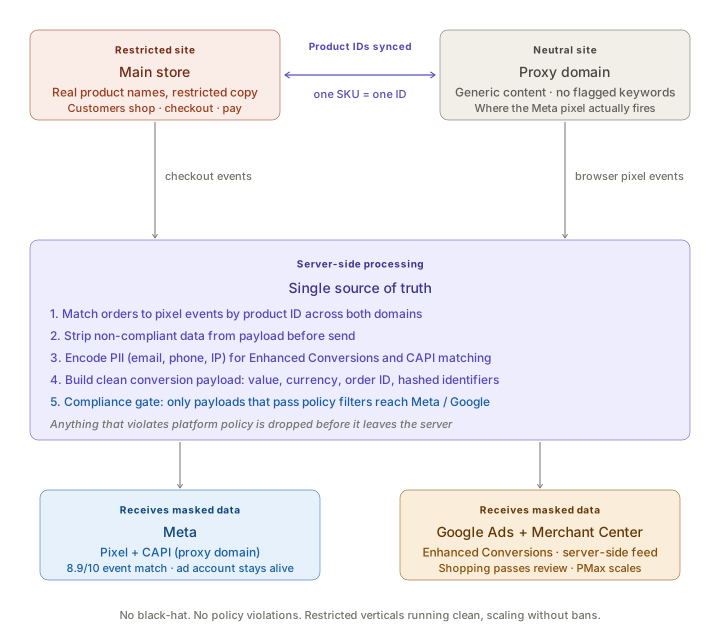
Two domains. One server. Masked output. Restricted verticals running clean.
This is the diagram everything else on this page is based on. The screenshots below prove it runs in production. Read this first.
The proof it actually runs
Four screenshots from the live account and tracking setup.
Google Ads dashboards and Meta Events Manager. Date ranges and account IDs visible in frame. Captions describe exactly which number to look at and what it means.
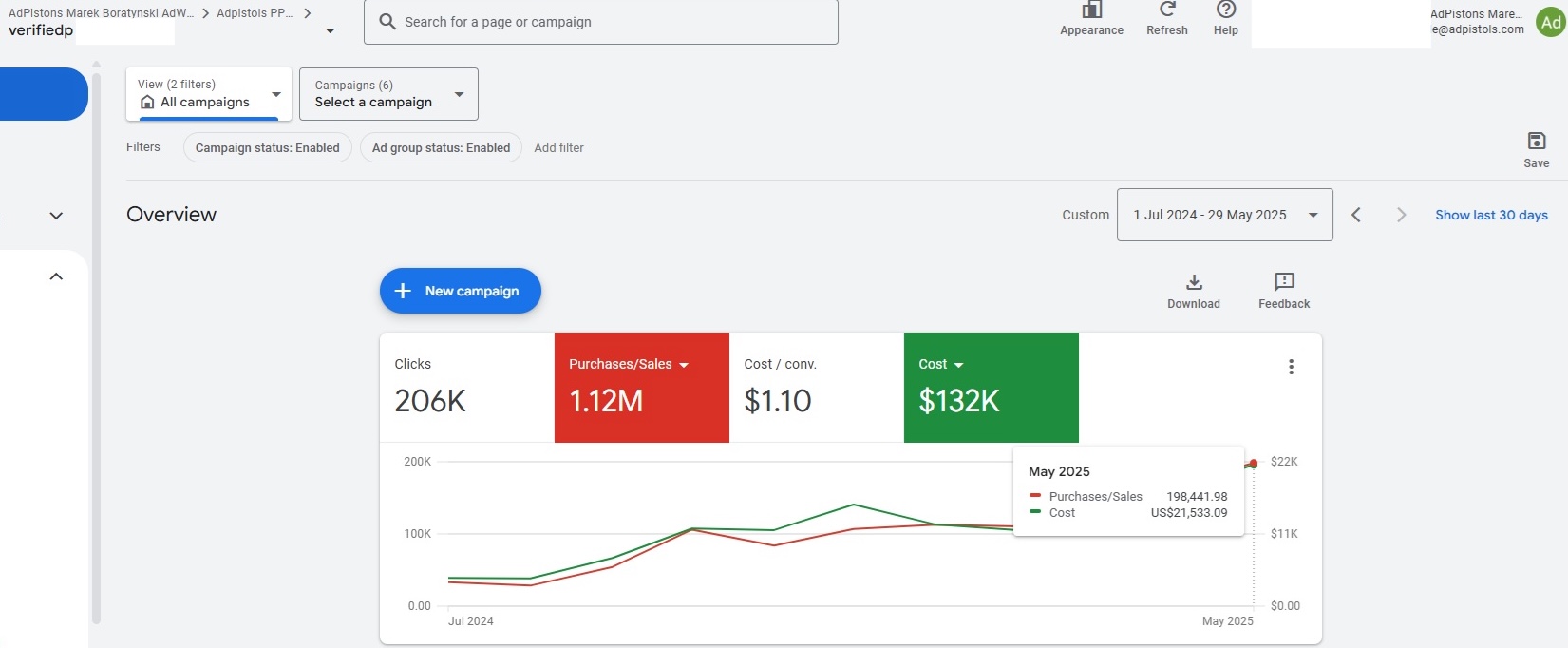
Fig 1 - 11-month account overview · $132K spend → $1.12M attributed revenue
Google Ads Overview for verifiedpeptides (Jul 2024 – May 2025). Red card: $1.12M in tracked Purchases/Sales value. Green card: $132K total spend. Cost/conv $1.10 on 206K clicks. Math: $1,180,226 ÷ $131,952 = 8.94× ROAS, in line with the 859% headline. Tooltip shows May 2025 final month: $198,441 revenue on $21,533 spend (9.22× ROAS, last full month captured). Revenue line pulling ahead of cost consistently from month 3 onwards.
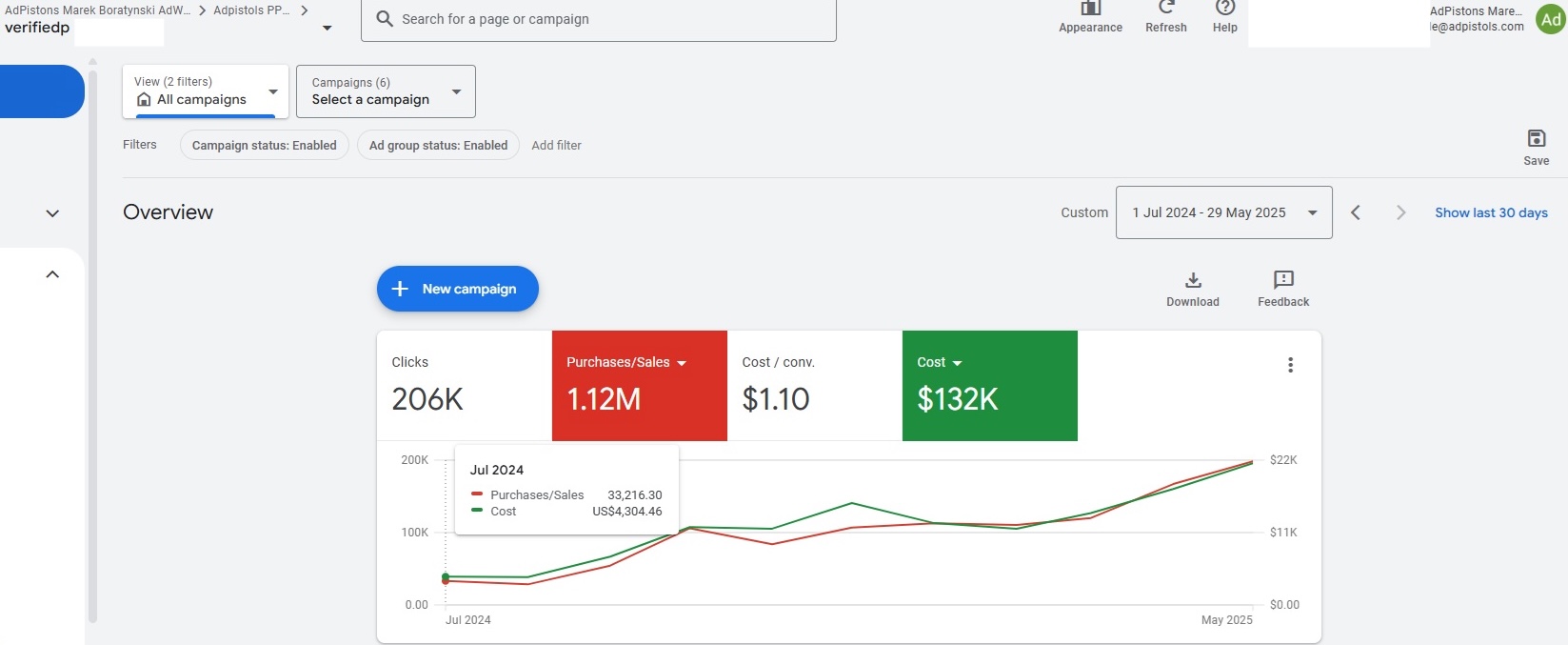
Fig 2 - Month 1 baseline · Jul 2024 · where the account started
Same overview, tooltip at Jul 2024 start. Purchases/Sales $33,216 · Cost $4,304. Math: $33,216 ÷ $4,304 = 7.72× ROAS. Not a bad starting point, but spend capped and structure not yet built for scale. Over 11 months spend grew 5× ($4,304 → $21,533) while ROAS held and improved. Revenue grew 6× ($33,216 → $198,441).
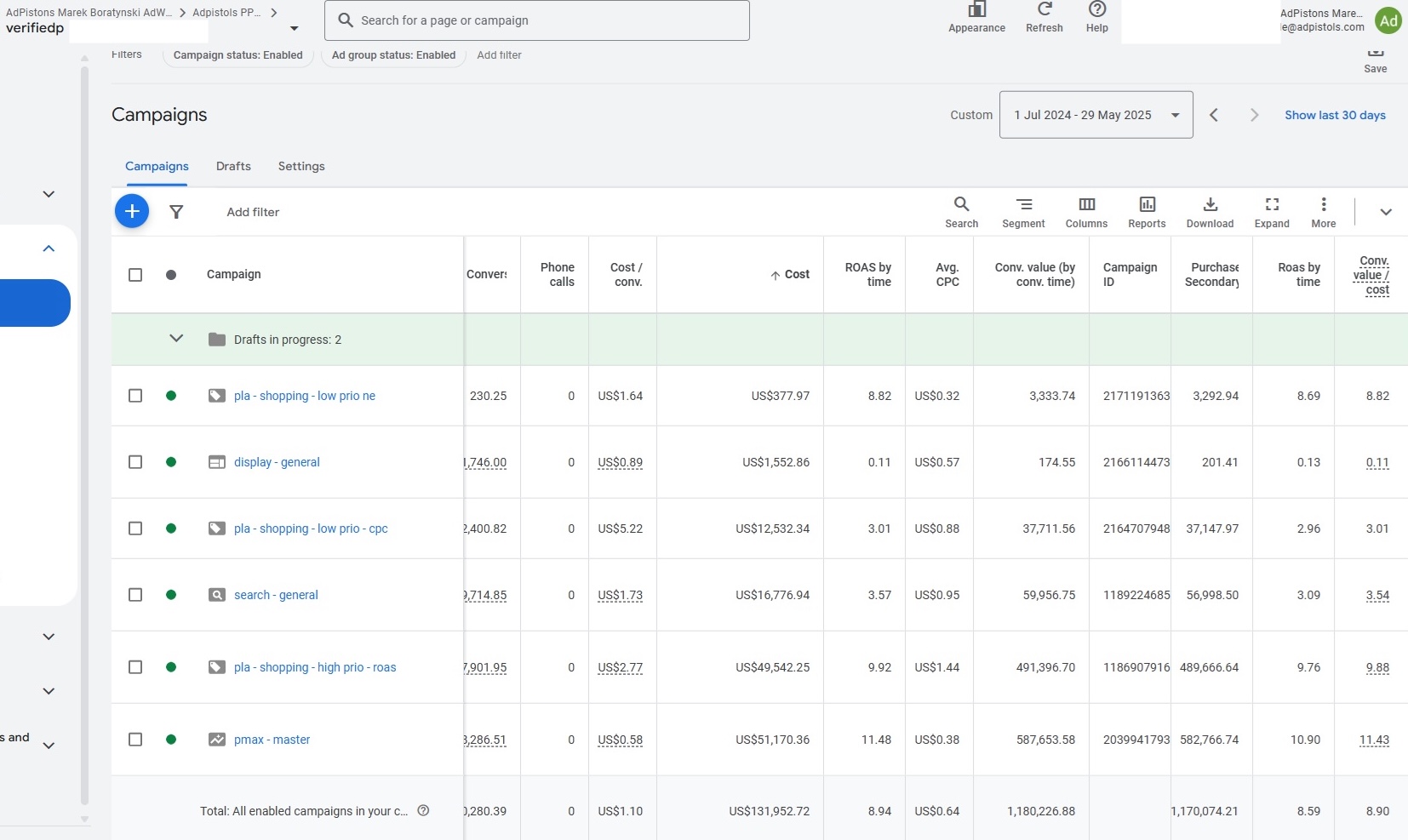
Fig 3 - Campaign-level breakdown · full 11-month ROAS by campaign
Each row is a separate campaign with a defined role. PMax master: 11.48× ROAS, $587K conv value on $51K spend. Shopping high prio: 9.92× on $49K. Search: 3.57×, lower ROAS but captures intent PMax misses. Display: 0.11× by design (retargeting reach, not conversion). Total account: $131,952 spend · $1,180,226 conv value · 8.59× ROAS.
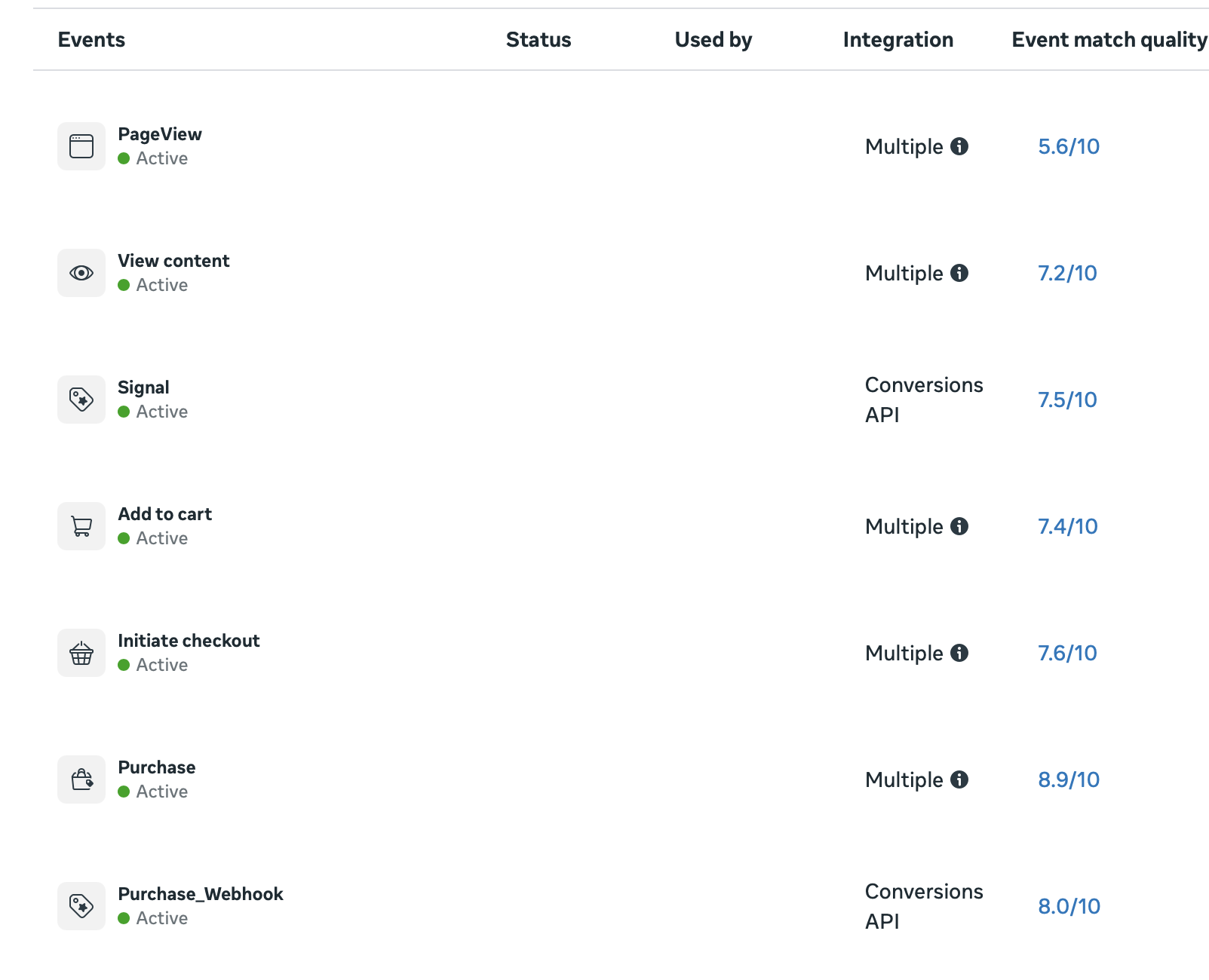
Fig 4 - Meta tracking · hidden domain pixel + CAPI · event match quality
Meta Events Manager for the proxy-domain pixel (ma_pixel_1). Purchase via browser pixel: 8.9/10 event match quality, 16.1K events. Purchase_Webhook via Conversions API: 8.0/10, 6.2K events. Without this setup, standard pixel on a peptide domain, Meta ads wouldn't survive the first policy review and signal quality would be too weak to train the algorithm.
Methodology
How to verify these numbers yourself.
Everything on this page is calculable from the screenshots above. Here's the math and what's intentionally hidden.
Google Ads screenshots
All Google Ads screenshots are from the live account dashboard, date range Jul 2024 – May 2025 visible top-right. Account ID 716-842-0705 and AdPistols Mark Boratynski owner tag visible in header. Campaign names reflect the actual account structure.
Meta Events Manager screenshot
Pixel screenshot is from Meta Events Manager for the ma_pixel_1 pixel, period Feb 19 – Mar 18, 2026. Shows real event volumes and event match quality scores, these are Meta's own quality signals, not third-party estimates.
What "Purchases/Sales" means in Google Ads
The $1.12M figure is the total monetary value of conversion events tagged as Purchase in the Google Ads conversion action, reported by Google's attribution model. It is not Shopify gross revenue. Actual backend revenue will differ by attribution window and return rate.
What working with me looks like
From your first call to a system that scales without resets.
No deck, no procurement process, no 6-month "discovery." This is what an engagement actually looks like, end to end.
Diagnostic & build plan
Live audit of your current account, Meta pixel, Merchant Center status, and policy history. Proxy domain feasibility check. Written scope with build cost, ongoing cost, and timeline before any commitment.
Build
Proxy domain Meta pixel + server-side CAPI. Server-side processing (product ID matching, PII encoding, compliance gate). Google Ads Shopping + PMax structure built for the category. Ads already running where it's safe to do so, so you don't lose weeks of pipeline to setup.
Scale phase
Smart Bidding learns the clean signal, ROAS ramps. Additional, more complicated setups layered in as part of the Restricted Industry Framework: advanced retargeting, secondary proxy patterns, deeper compliance work where the category demands it, more advanced landing pages if needed.
Ongoing partnership
Campaign management, creative refresh, quarterly architecture reviews. New category or product line launches handled with the same playbook. You stop firefighting and start compounding.
Common questions before you book
The four things every restricted-vertical operator asks me first.
Is the proxy domain setup against Meta or Google ToS?
No. It's the same cross-domain pattern publishers, affiliates, and large e-commerce brands use for attribution. The pixel fires on a domain whose content is compatible with platform policy. Restricted product details are masked server-side before any payload reaches the ad platform. No misrepresentation, no policy violation, fully documented.
How long until I see results?
Tracking and account go live in 2-4 weeks. ROAS at scale takes 6-12 weeks as Smart Bidding learns from the clean signal. The account on this page hit sustained 8× ROAS in month 2 and held it for 11 months.
What does it cost?
Build is one-time, scoped after the diagnostic. Ongoing management is the Restricted Vertical Framework tier on the pricing page: from €6,000/month per channel (Google + Meta together from €12,000/month). Setup from €5,000, scoped after the diagnostic. Ad spend always billed separately direct to platform.
What if I'm in CBD, nootropics, supplements, or hemp, not peptides?
Same playbook. The architecture (proxy domain + CAPI + product ID matching + server-side compliance gate) is vertical-agnostic. The category-specific work is in policy interpretation, ad copy, and Shopping feed tuning. I've run this in peptides, CBD, hemp, and adjacent supplement categories.
What if my account gets banned anyway?
It happens, even with the best architecture. When it does, I know the appeal process, I keep backup ad account structure ready, and recovery is 1-2 weeks instead of 6+. The point of this work is not to claim immunity, it's to make bans rare and recovery fast. Restricted is a marathon, not a single sprint.
Third-party verification
Where to verify the work exists.
What this case study doesn't show - and why
- Shopify or backend revenue dashboard, client privacy. The $1.12M is Google-attributed, not accounting revenue.
- The proxy domain name used for the hidden pixel, that's operational infrastructure that stays private.
- Historical Meta Ads performance, pre-engagement screenshots were not preserved.
- Formal written consent not yet received, name will be redacted to "US peptide research brand" if the client requests it.
Operator's note
If you're running a peptide, CBD, nootropic, hormone, or any other restricted-category brand and your accounts keep getting flagged (Merchant Center suspended, Meta pixel blocked, Shopping feed disapproved), you don't need another agency that learns at your expense. You need someone who already runs this playbook for accounts like yours.
I've been keeping restricted-category ad accounts alive since the iOS 14.5 reset broke standard tracking. I know which Meta reviewers flag what, which Merchant Center policies shift quarterly, and where the proxy domain pattern stops working and you need a different shape entirely.
That might mean a hidden-domain Meta pixel with CAPI, a Shopping + PMax structure built around how Google actually treats the category, or ongoing policy management so you stop scrambling every time the rules shift. Tell me what's happening, I'll tell you what's realistic.
"Marek audited a serverside tracking setup from another freelancer I hired here and he found some critical issues immediately; the previous set up ended up being a waste of money. I'm very happy I found Marek; very thorough and knowledgeable, and provided a full report of what needed to be fixed. Will be hiring him again for more work."

Verifiedpeptides · peptides · Upwork verified
Selective by design
I take 1-2 new restricted-vertical accounts per quarter.
If you're at $5K+/month ad spend in a restricted category and serious about scale, three ways to start the conversation.
Path 1 · Self-serve
Tracking health check
90-second diagnostic, automated score, top 3 findings. No call required. Best when you want a read on tracking before you book my time.
Run the check →Path 2 · Paid
Full Audit
Up to 3 marketing channels in one written report: structure, tracking, attribution, plus an AI opportunity layer. Delivered within 72 hours. €1,500 fixed.
See audit options →Path 3 · Direct
Strategy Call
Direct conversation about scope, fit, and price. No diagnostic required first.
Book the call →Or email contact@adpistols.com with your current setup.